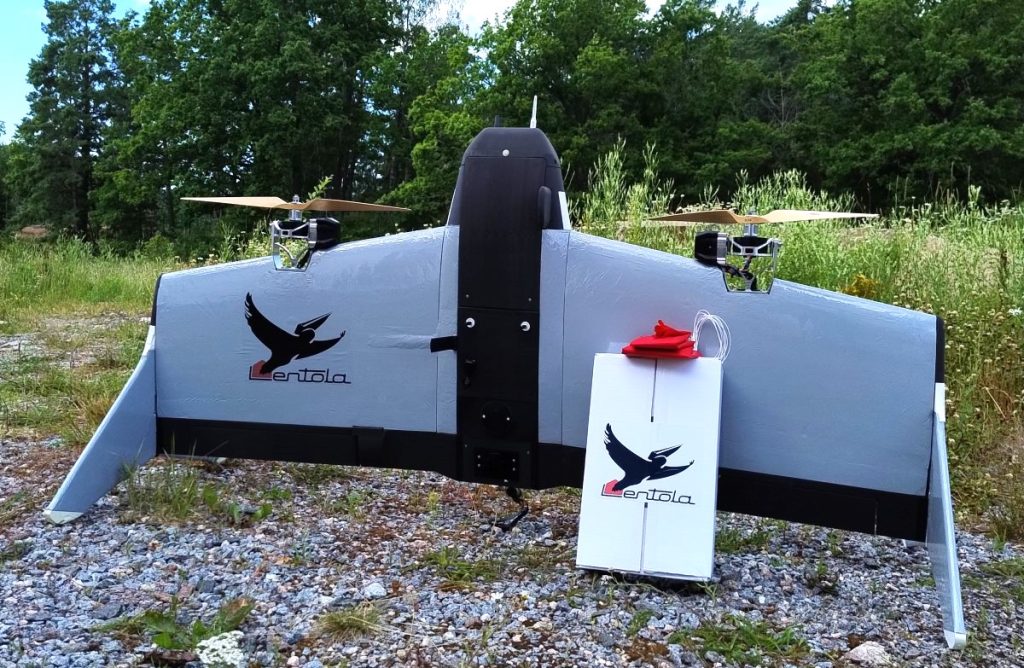
A concept rarity: Tiltrotor Tailsitter
There are many different aircraft concepts around the world. Each concept involves trade-offs, as no single design is ever the best in every aspect of flight. For example, a multirotor drone can hover most steadily in strong winds because it has no wings, but for the same reason, its range is very limited.
The exceptional hovering capabilities and performance of Lentola’s aircraft are made possible by the company’s patented tilt-rotor mechanism. The system actively adjusts the aircraft’s attitude throughout the hover phase based on wind direction and speed.
A tailsitter aircraft would find it nearly impossible to hover and land stably in windy conditions without such a system. Lentola has patented this tilt-rotor mechanism in both the EU and the United States.
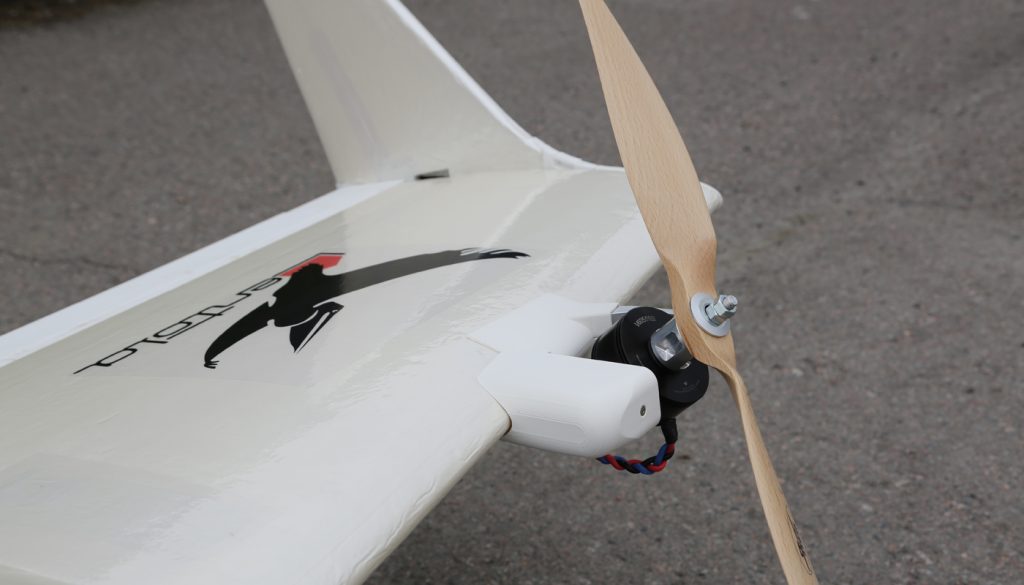
The tilt-rotor tailsitter is such a complex concept that industry professionals initially questioned whether it could work at all. Others have also built tailsitter aircraft, but in some cases, the concept has remained more of an animation than a working reality.
The tilt-rotor tailsitter is an unconventional aircraft concept, and its advantages over other designs are equally exceptional:

1. The most significant advantage over nearly all other drones is that Lentola VTOL Cargo can continue flying in the most challenging weather conditions, including icing conditions.
The effects of weather on an aircraft can be tested outdoors, but outdoor testing alone cannot produce reliable results because temperature and humidity are constantly changing. For this reason, in addition to outdoor testing, Lentola’s system has been tested in a laboratory under the most demanding conditions — making Lentola one of the very few, if not the only, companies in the world to do so.
The ability to operate in icing conditions is an absolute prerequisite for safe, year-round operations, as such conditions are relatively common. They occur wherever winter temperatures hover around freezing and humidity is high. We believe this has been one of the most significant obstacles to the widespread adoption of drone delivery services.
2. Landing is the most dangerous phase of flight for all aircraft. Strong winds are a major cause of hazardous situations and frequently prevent even passenger aircraft from landing at airports around the world.
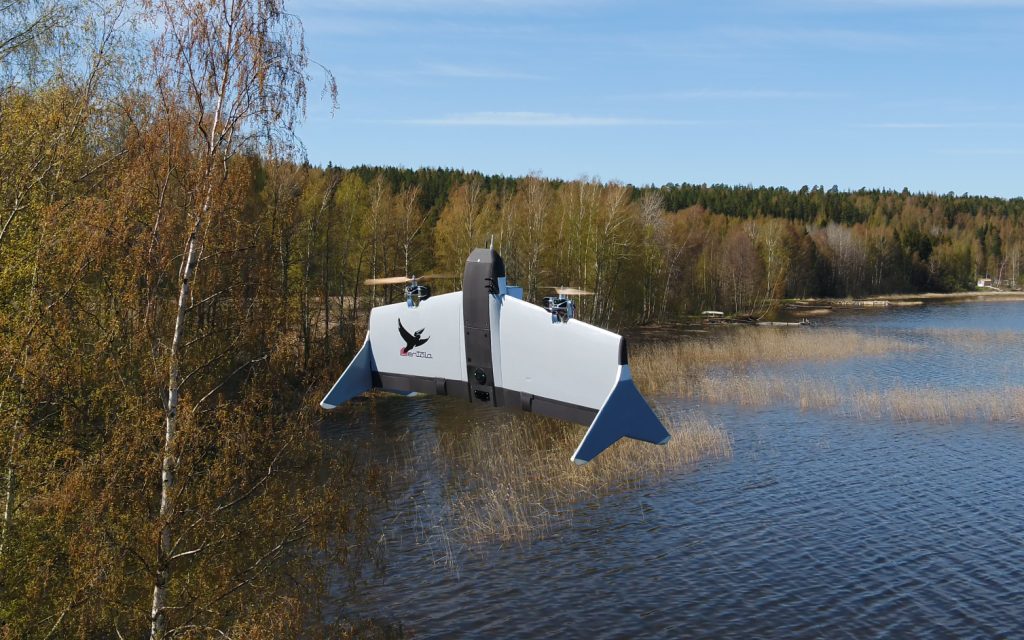
Lentola VTOL Cargo uses a patented tilt-rotor mechanism that enables it to hover in windy conditions by actively adjusting the aircraft’s attitude throughout the hover phase based on wind direction and speed.
3. Lentola VTOL Cargo is easier to load than almost any other drone. While cargo usually has to be secured awkwardly underneath the aircraft, Lentola’s aircraft allows cargo to be attached quickly and effortlessly to its underside.
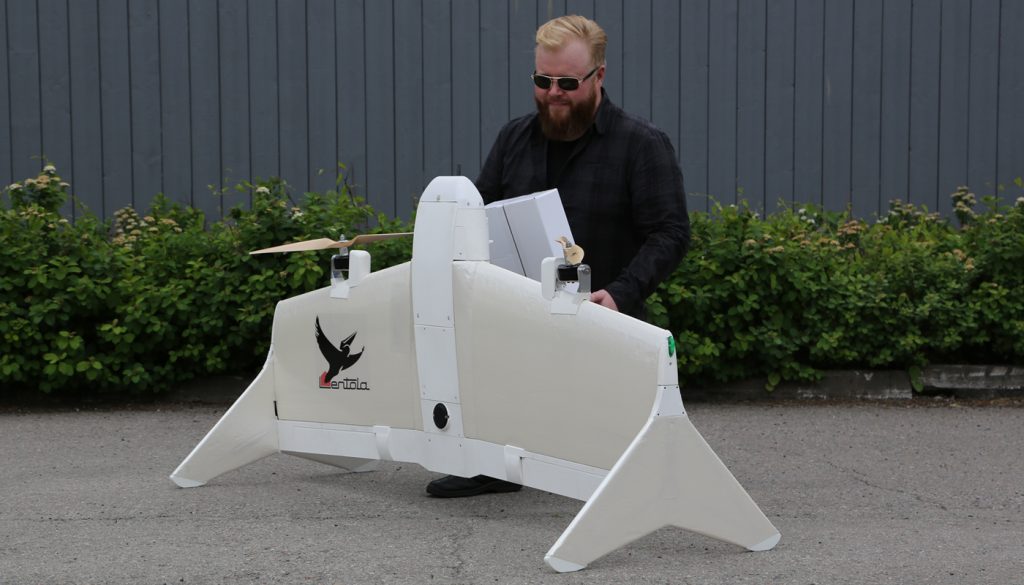
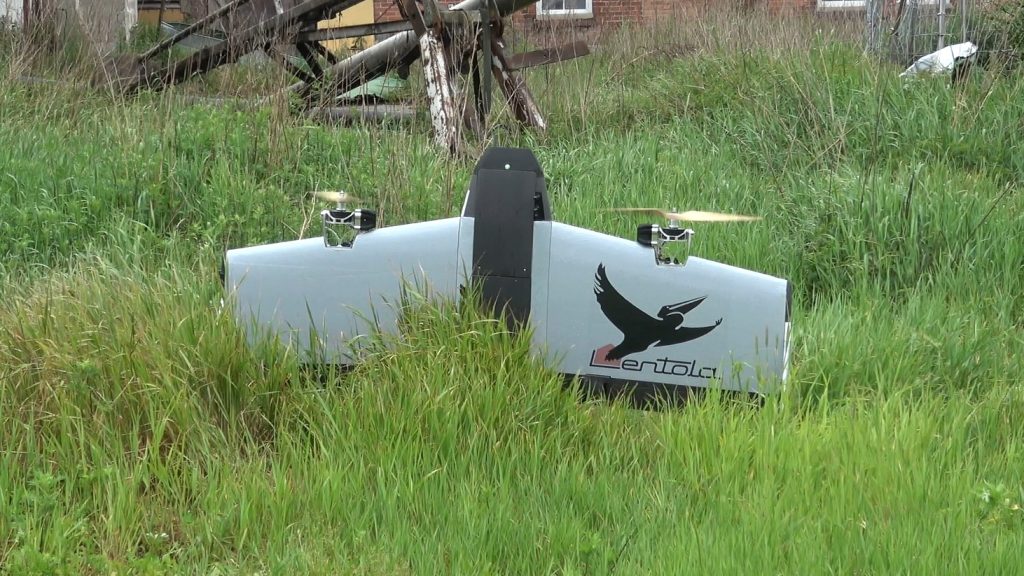
4. Lentola VTOL Cargo is capable of vertical takeoff and landing (VTOL). In an emergency, it can even land among tall ground vegetation, as its propellers are positioned well above the ground.
Technical Specifications
- Wingspan 175 cm
- Maximum takeoff weight 15,5 kg
- Payload capacity 3 kg + container and parachute
- Range 30-80 km, depending on payload
- Typical airspeed: 20 m/s
- Wind tolerance during landing 8 m/s
- Wind tolerance in level flight 15 m/s
- Communication LTE