Defibrillators and medicine
When transporting a defibrillator, every second counts. Delivery drones offer significant benefits to healthcare, particularly by speeding up deliveries, reducing costs, and reaching hard-to-access areas. Unmanned aerial vehicles can bypass traffic congestion and poor road connections, making them a highly effective means of transport in emergency situations.
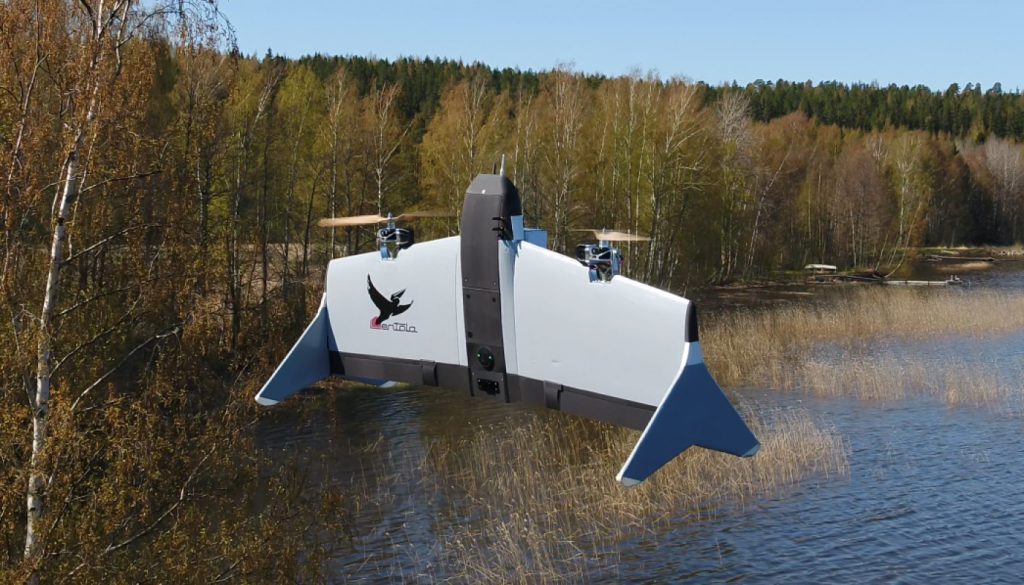
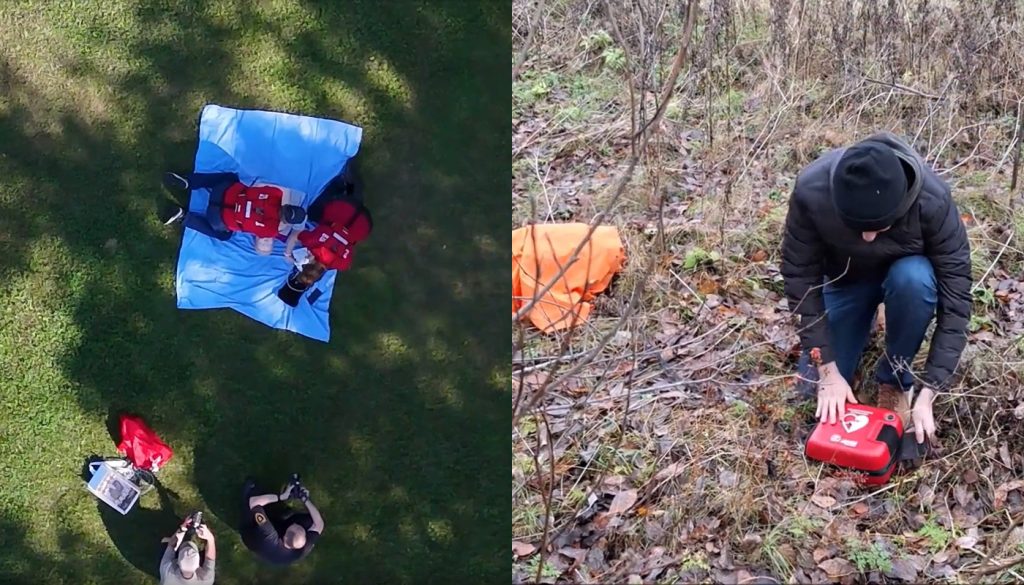
Lentola’s drones can deliver urgent medical supplies directly to where they are needed. For example, antivenom for a viper bite can be flown directly to a remote location or the archipelago. In the event of a cardiac arrest, a drone can deliver a defibrillator to the scene minutes before a medical helicopter arrives.
Lentola designed its user interface to be so simple that errors can be avoided even under extreme time pressure. The route and drop-off point can be programmed into the system in moments with just a few clicks, which can be crucial to a patient’s chances of survival.
Below is a comparison of defibrillator delivery by drone versus helicopter.
A defibrillator can be airborne within one minute when transported by drone. A drone optimized for this purpose can reach speeds of approximately 150 km/h, while a helicopter can fly at around 250 km/h.
When a defibrillator is transported by a medical helicopter, the team can take off in under four minutes after receiving an emergency call under optimal conditions. Although a helicopter can fly faster than a drone, its base is likely to be much farther away. Most helicopters are also unable to operate in the most challenging weather conditions, such as icing conditions. Landing a helicopter is time-consuming, and finding a suitable landing site is sometimes impossible.
→ If a drone takes off from a rescue station in the Turku archipelago, it can likely deliver a defibrillator to the patient 5–10 minutes faster than a helicopter.
Emergency relief supplies
Delivery drones provide fast, flexible, and potentially life-saving assistance in disaster areas that are difficult or impossible for conventional vehicles to reach. They complement traditional emergency response logistics when infrastructure has been destroyed and it is difficult or dangerous for people or vehicles to proceed, such as near buildings at risk of collapse, along steep cliffs, or across fragile ice.
Lentola VTOL Cargo can deliver first aid supplies, defibrillators, life jackets, and communication equipment to people who have become stranded long before ground crews can reach them. There may also be an urgent need for food and clean drinking water, which Lentola’s aircraft can deliver quickly and easily.